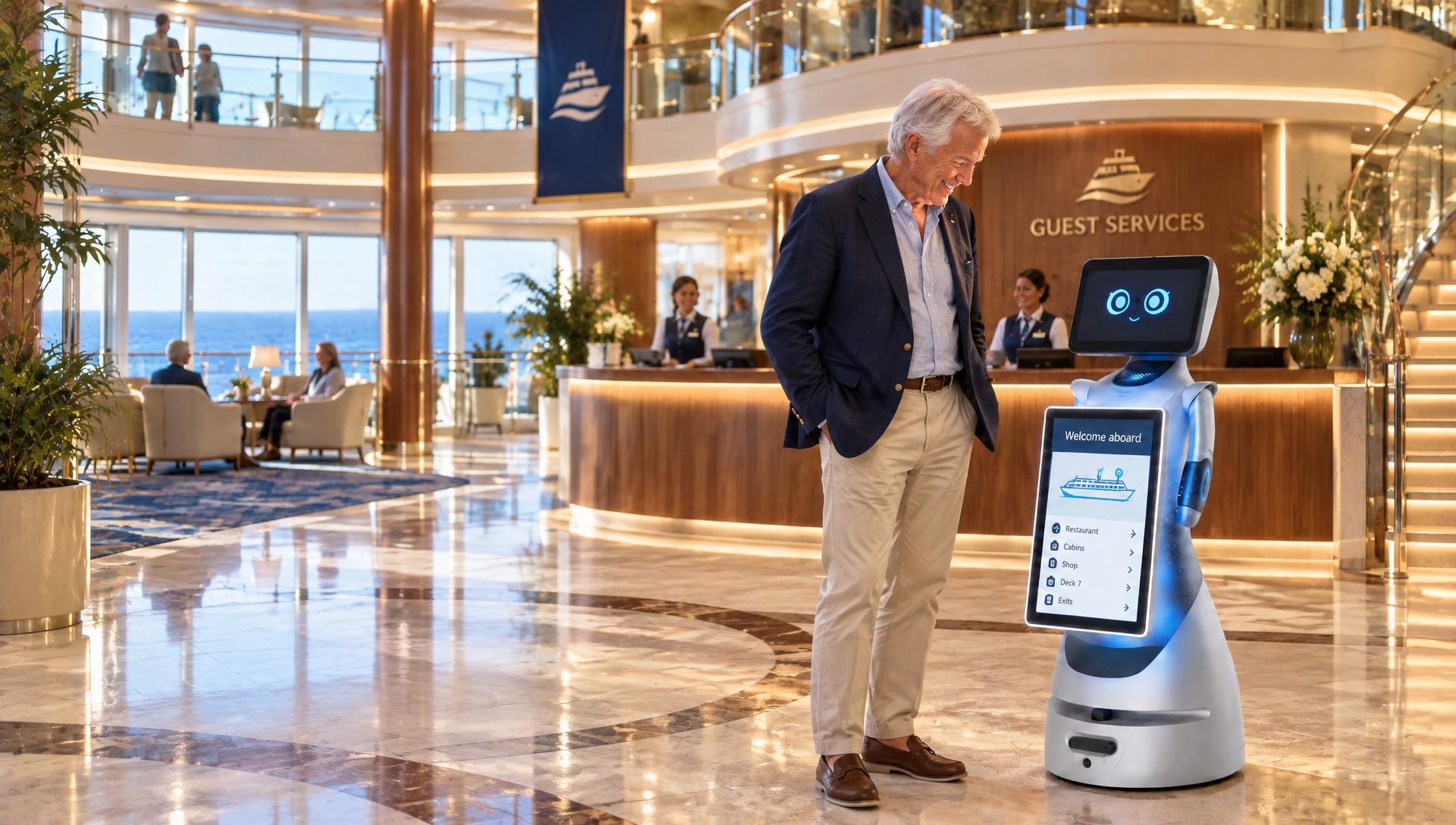
Guest guidance & information
Alf
Welcome passengers on board, show deck maps and directions on its large screen, and answer common questions so crew can focus on personal service.
Meet Alf
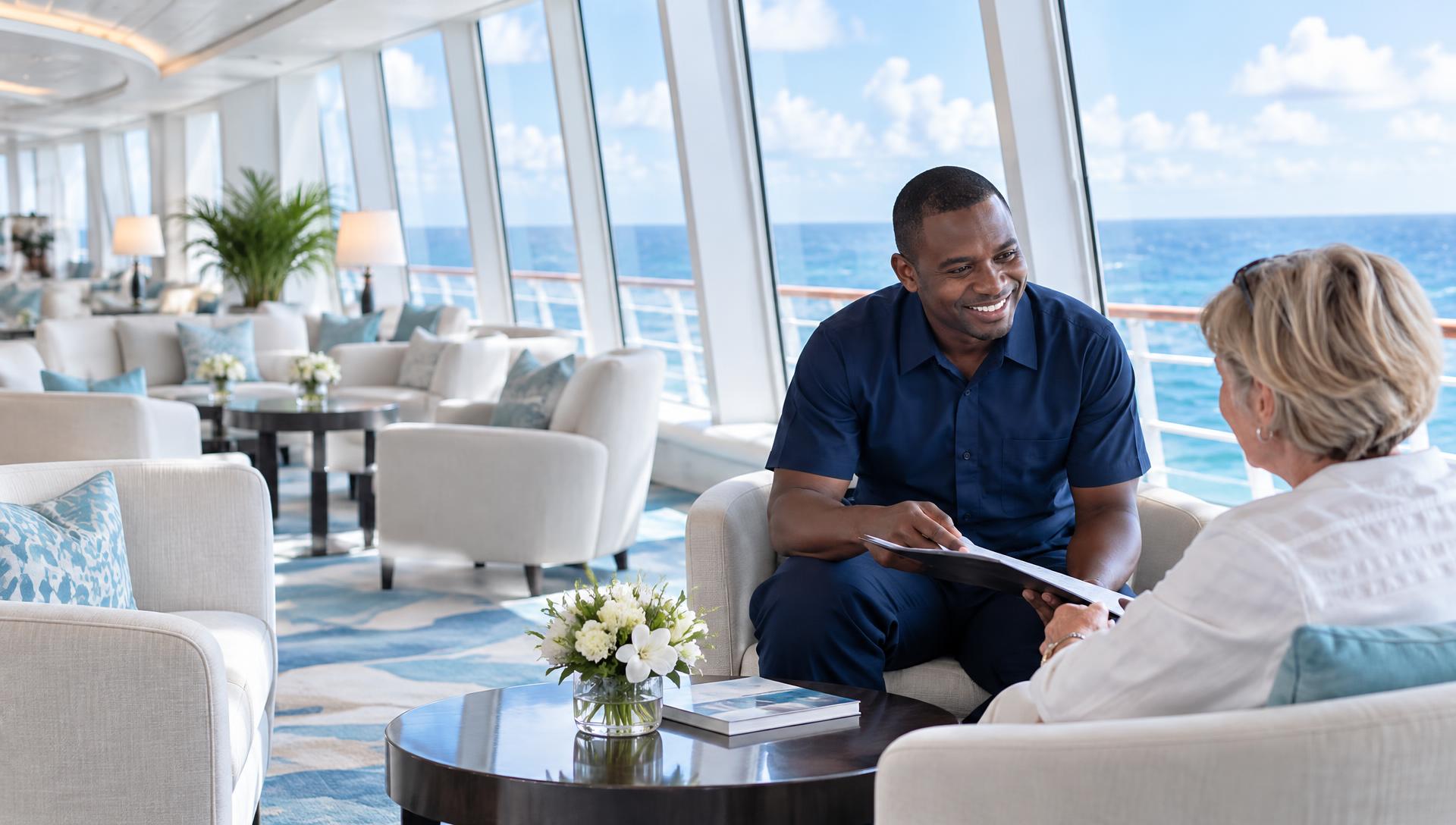
Marine & Offshore
Support crew, streamline logistics and improve the guest experience — onboard and onshore.
Cruise ships and shipbuilding environments are complex, high-traffic spaces where logistics, service and operations happen simultaneously — often relying heavily on manual work.
Robotics helps reduce workload, improve consistency and support both crew and guest-facing operations. The starting point is one clear task that fits the vessel or site.
Ease pressure on crew while guests get help when they need it.
Keep materials moving and large spaces clean.
From restaurant service to logistics and clean floors, each role starts with a specific task. Suitability and safety are assessed for your vessel or site.
Guest guidance & information
Welcome passengers on board, show deck maps and directions on its large screen, and answer common questions so crew can focus on personal service.
Meet Alf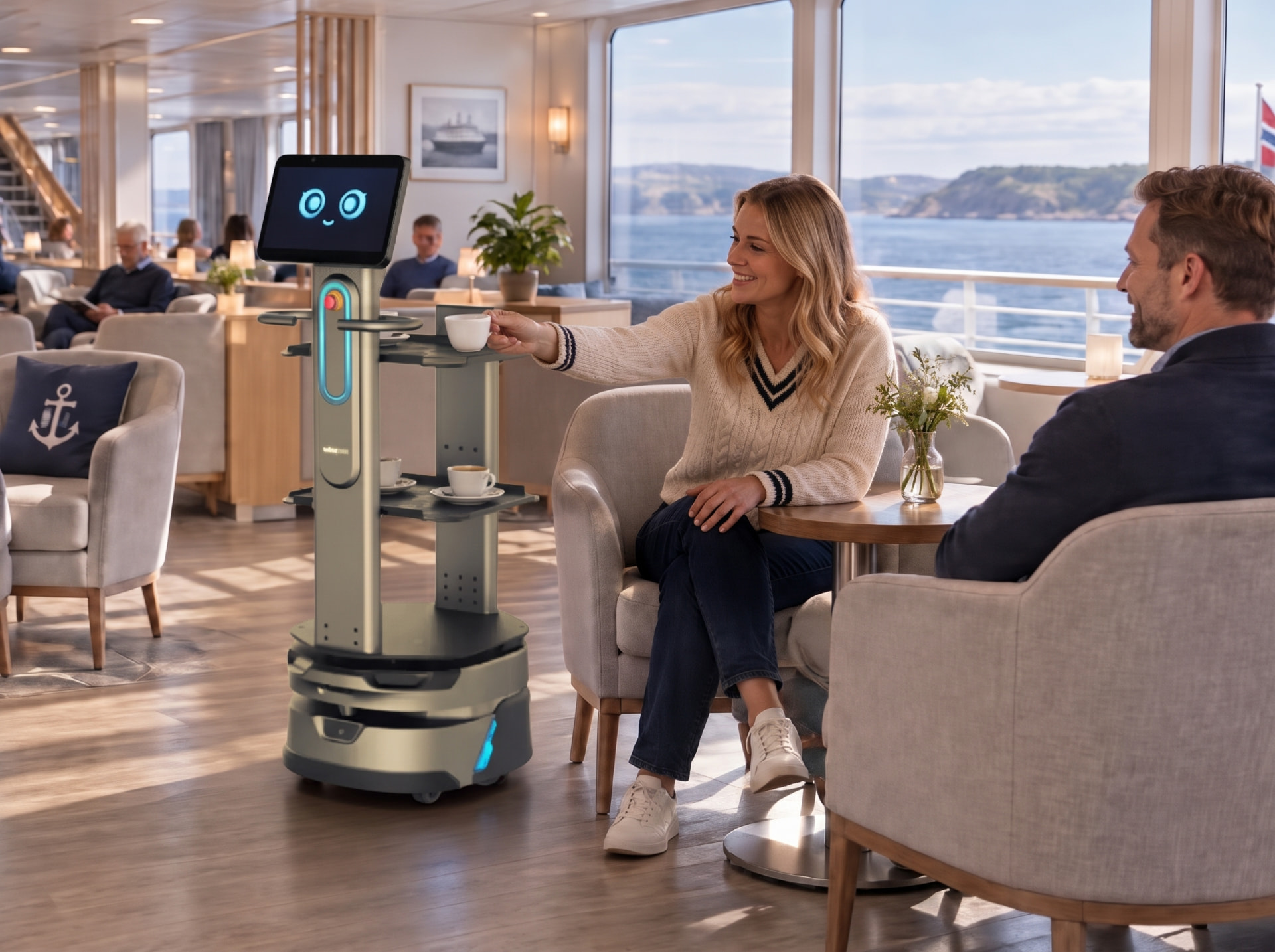
Restaurant & service support
Carry plates and drinks, deliver orders and help restaurant staff through high-volume service periods on board.
Meet Eddie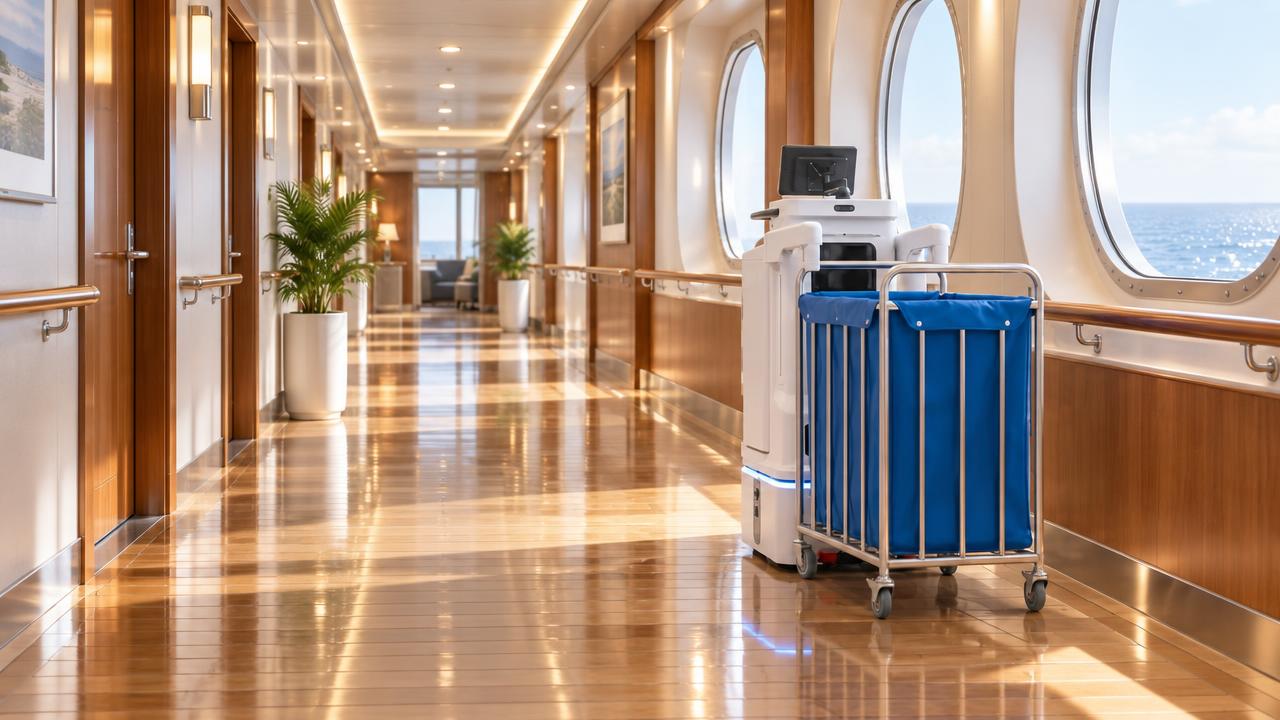
Internal logistics
Transport tools, spare parts and materials across shipyards and onshore warehouses, reducing physically demanding work.
Meet Drivey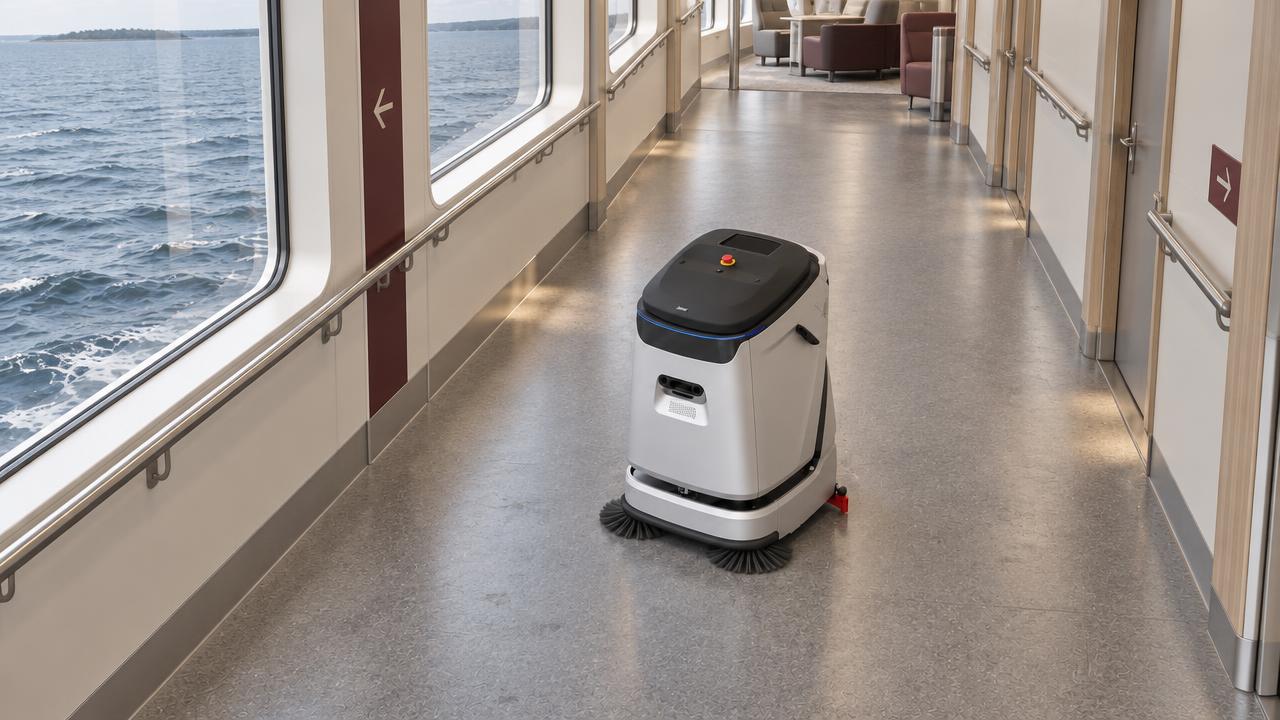
Autonomous cleaning
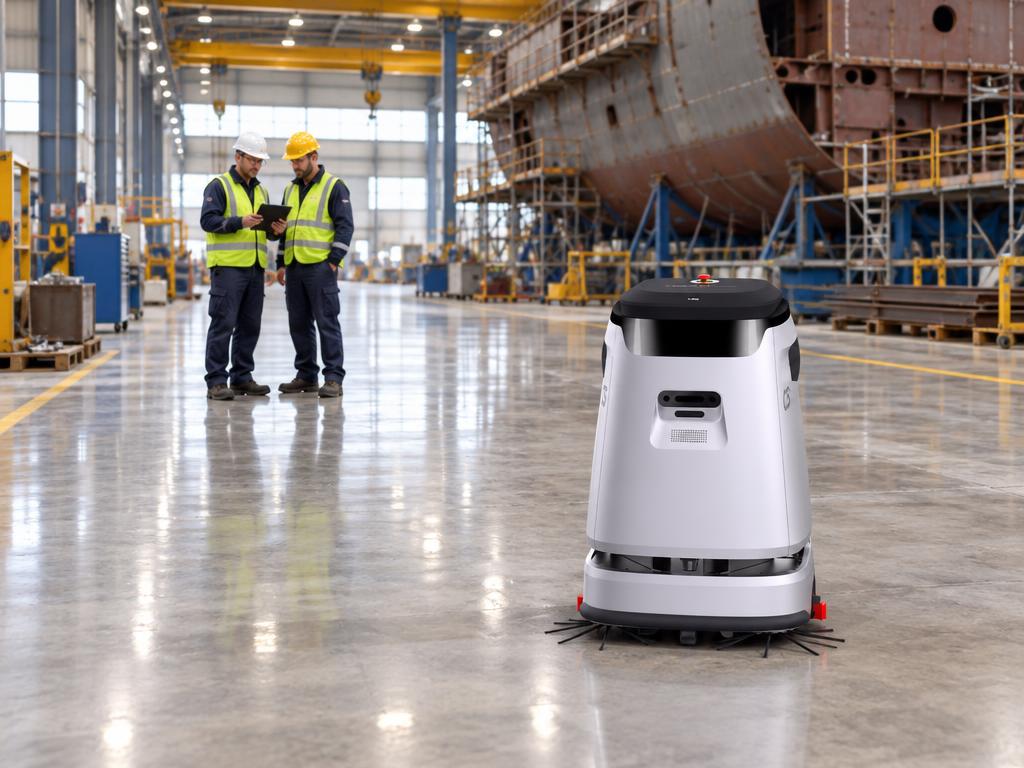
Maintain clean floors in passenger areas and large shipbuilding facilities through scheduled, autonomous cleaning.
Meet FreddyRobotics adoption doesn’t need to be complex. A focused pilot lets crew and managers assess the robot together, where it will actually work.
Choose a focused task — such as guest guidance, cleaning or internal logistics — together with crew or site staff.
Review decks, corridors, lifts, thresholds, passenger flows and safety rules on board or on site.
Run the defined use case alongside normal routines and see how it fits crew and guests.
Review real operational value and feedback before extending to more areas or vessels.
Whether onboard a cruise ship or inside a shipbuilding facility, we help you identify practical automation opportunities and bring them into real operations.
We're here to help!