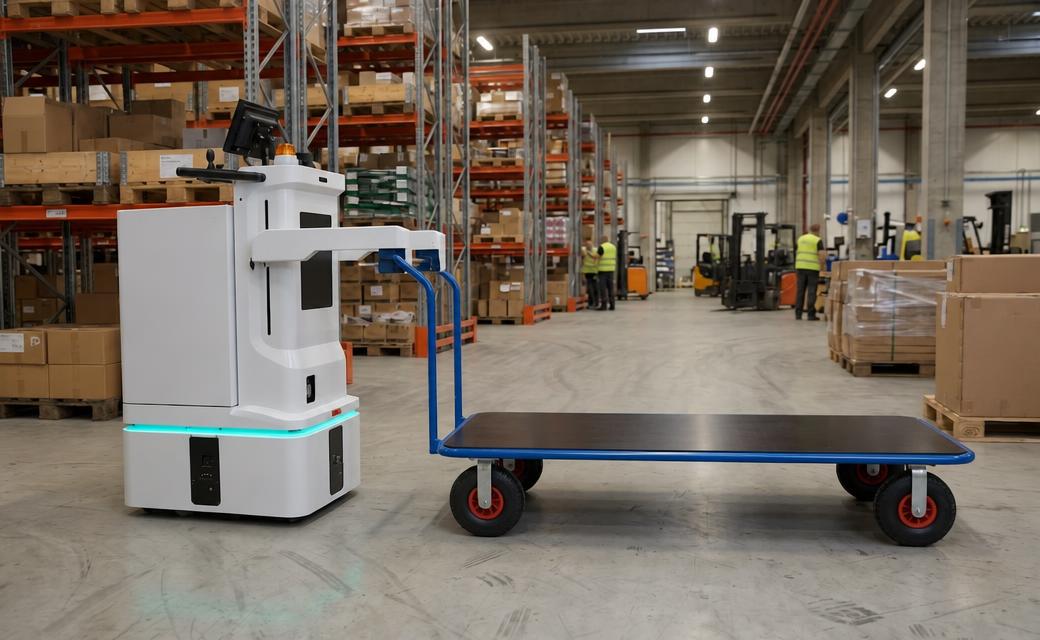
Internal material transport
Drivey
Move existing trolleys and carts between storage, production and dispatch areas, with routes and connections evaluated around your equipment.
Meet Drivey

Industrial Operations
Automate internal transport and routine cleaning — so your team can focus on production, quality and the work that needs skilled hands.
A cart of parts needs to reach the line. Empty bins need to go back. Floors need cleaning between shifts. These small, repeated movements add up to hours of walking and waiting every day.
Robots can take over selected routine runs — not replace operators or forklifts. The starting point is one clear material flow that fits your layout and makes sense to the people on the floor.
Reduce walking and waiting between storage, picking and dispatch.
Keep workstations supplied while operators stay at the line.
From heavy trolleys to small deliveries and clean floors, each role starts with a specific task. Suitability, configuration and safety are assessed for your site.
Internal material transport
Move existing trolleys and carts between storage, production and dispatch areas, with routes and connections evaluated around your equipment.
Meet Drivey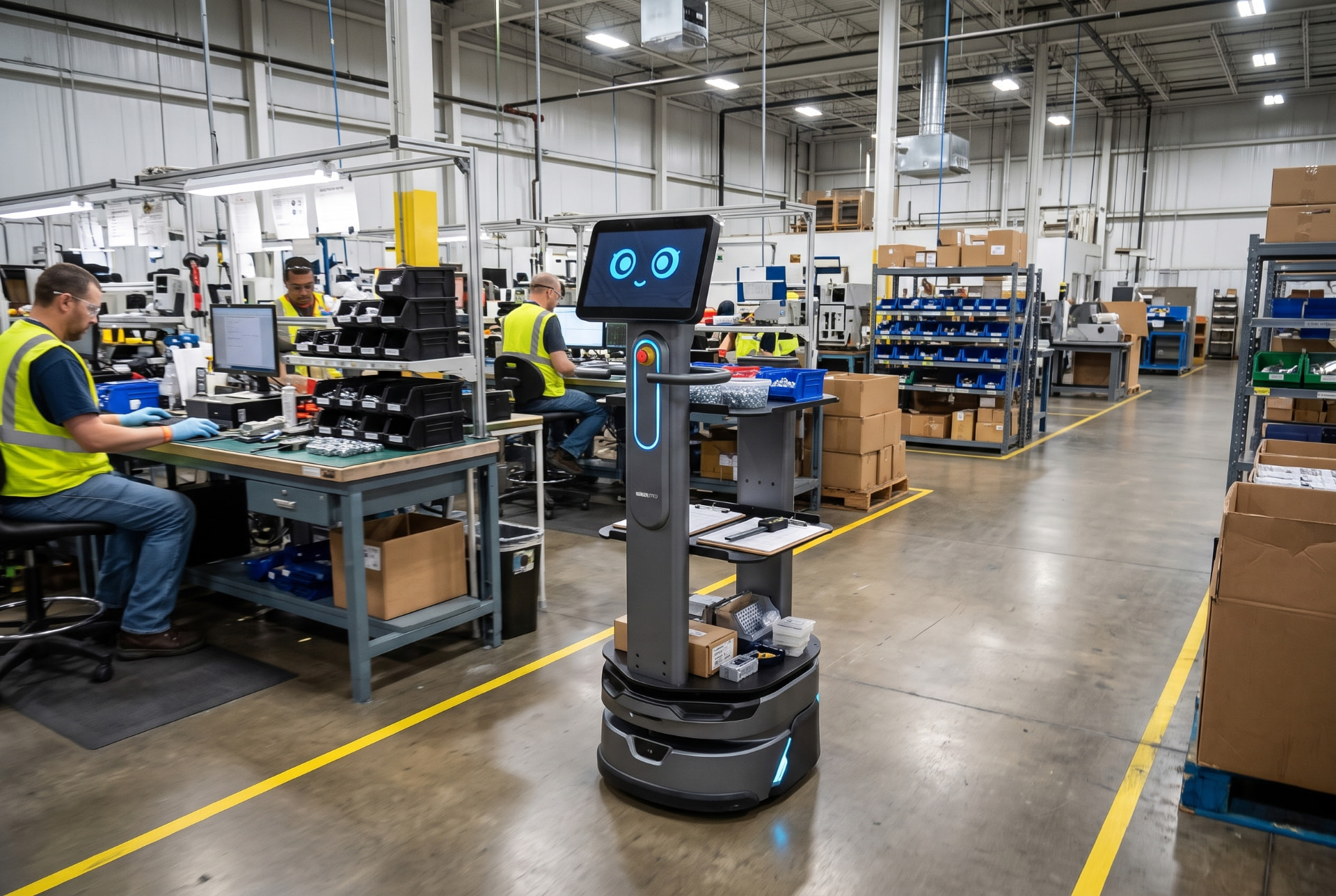
Indoor delivery
Carry smaller parts, tools and documents between workstations, offices and stores, so skilled staff spend less time walking.
Meet Eddie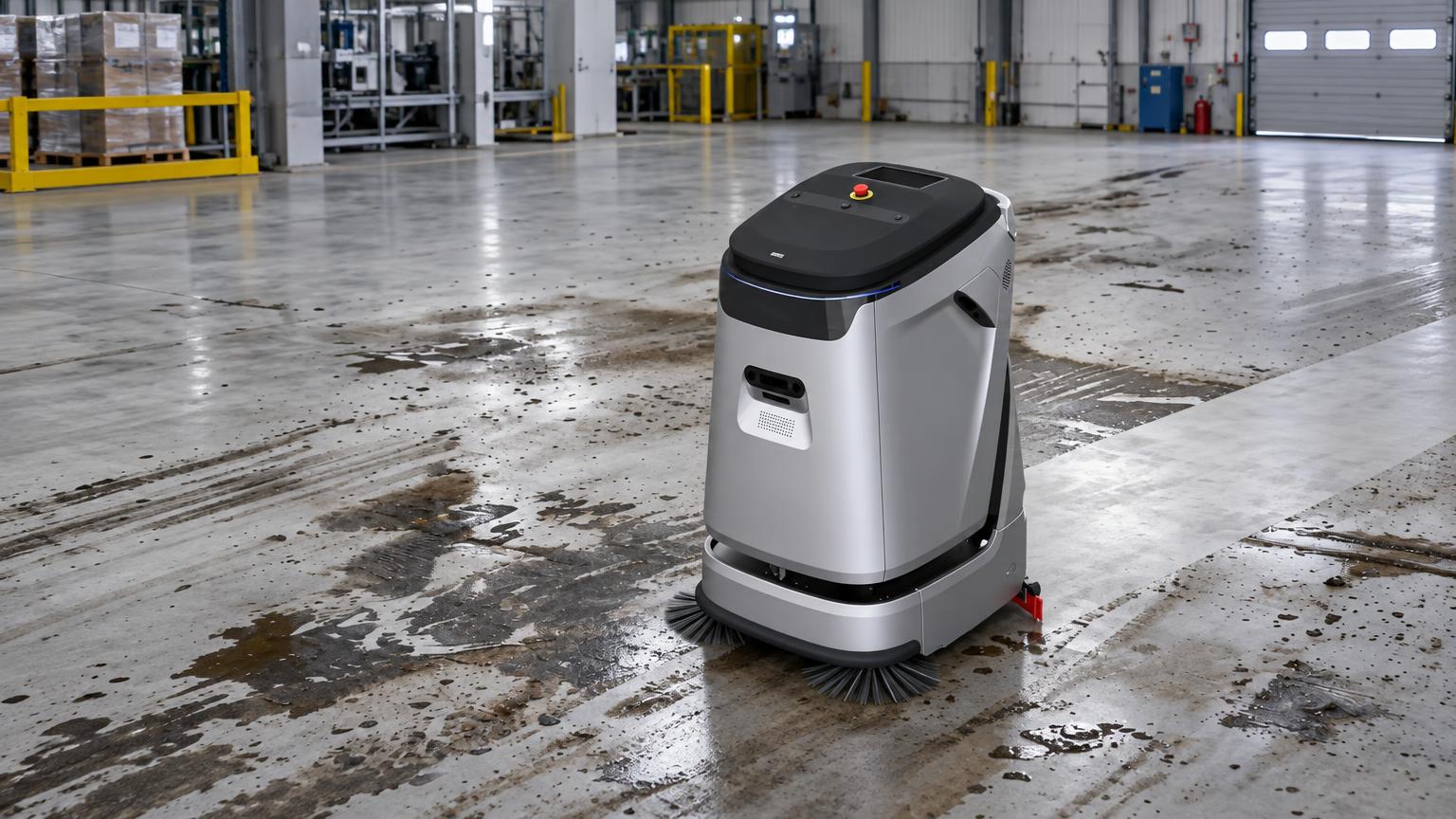
Floor cleaning
Take on repetitive floor cleaning in large halls and walkways, with schedules planned around shifts, traffic and safety zones.
Meet Freddy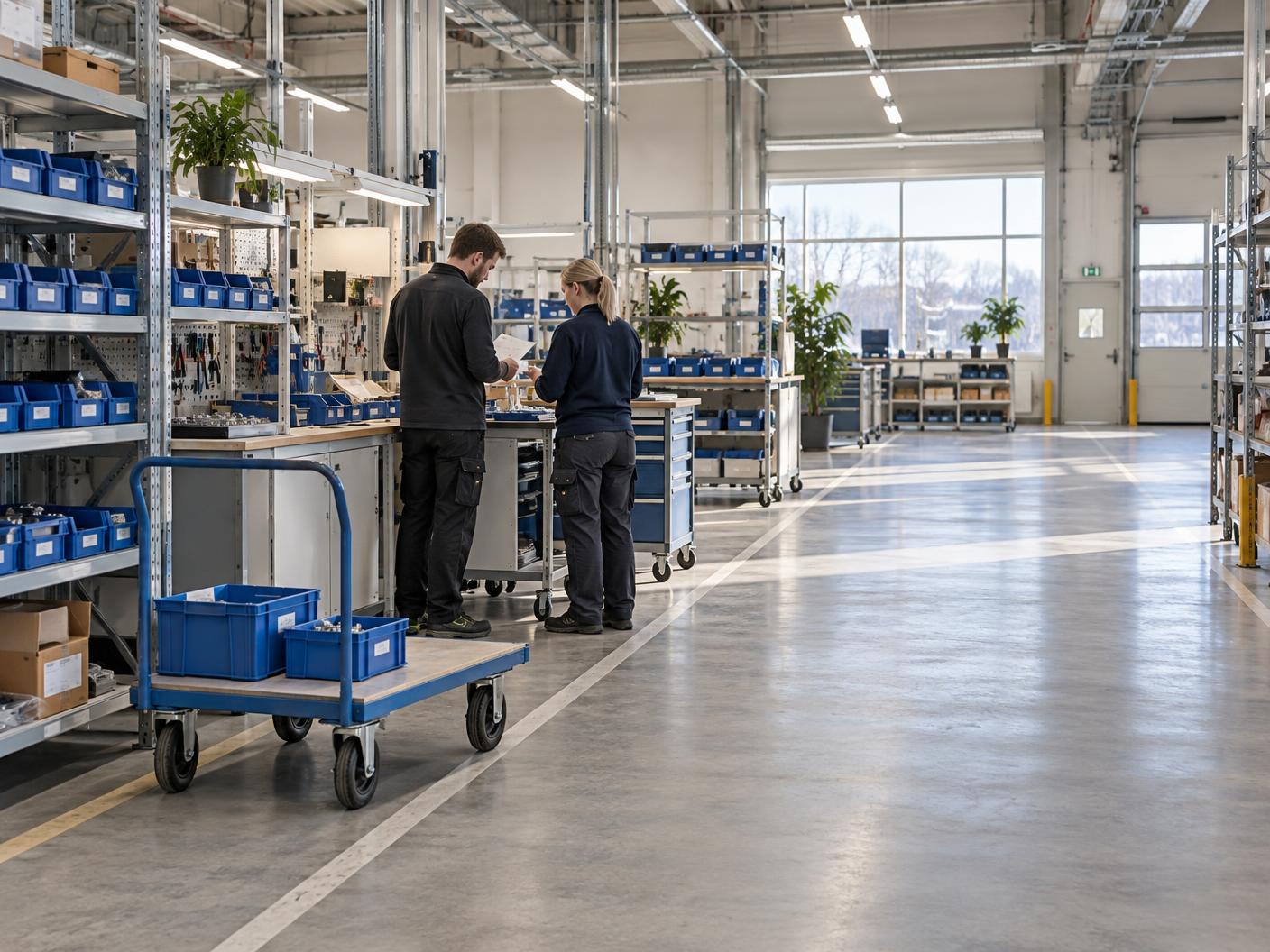
Built for real operations
Robots share aisles with people, forklifts and equipment. That is why every deployment starts with your layout, traffic and safety rules — not a generic setup.
Routes, doors, lifts and handover points are reviewed together with your team, so the robot fits the way your site already works.
A focused pilot lets operators and managers assess the robot together, on the floor where it will actually work.
Identify one repetitive transport or cleaning task with the people who do it every shift.
Review aisles, doors, lifts, forklift traffic, loading points and safety rules on site.
Run one defined use case during normal operations and see how it fits shift routines.
Review task completion, operator feedback and integration needs before expanding to more routes.
Tell us about your warehouse, production site or logistics centre. Together, we can identify a practical place to start.
Blog
We're here to help!
