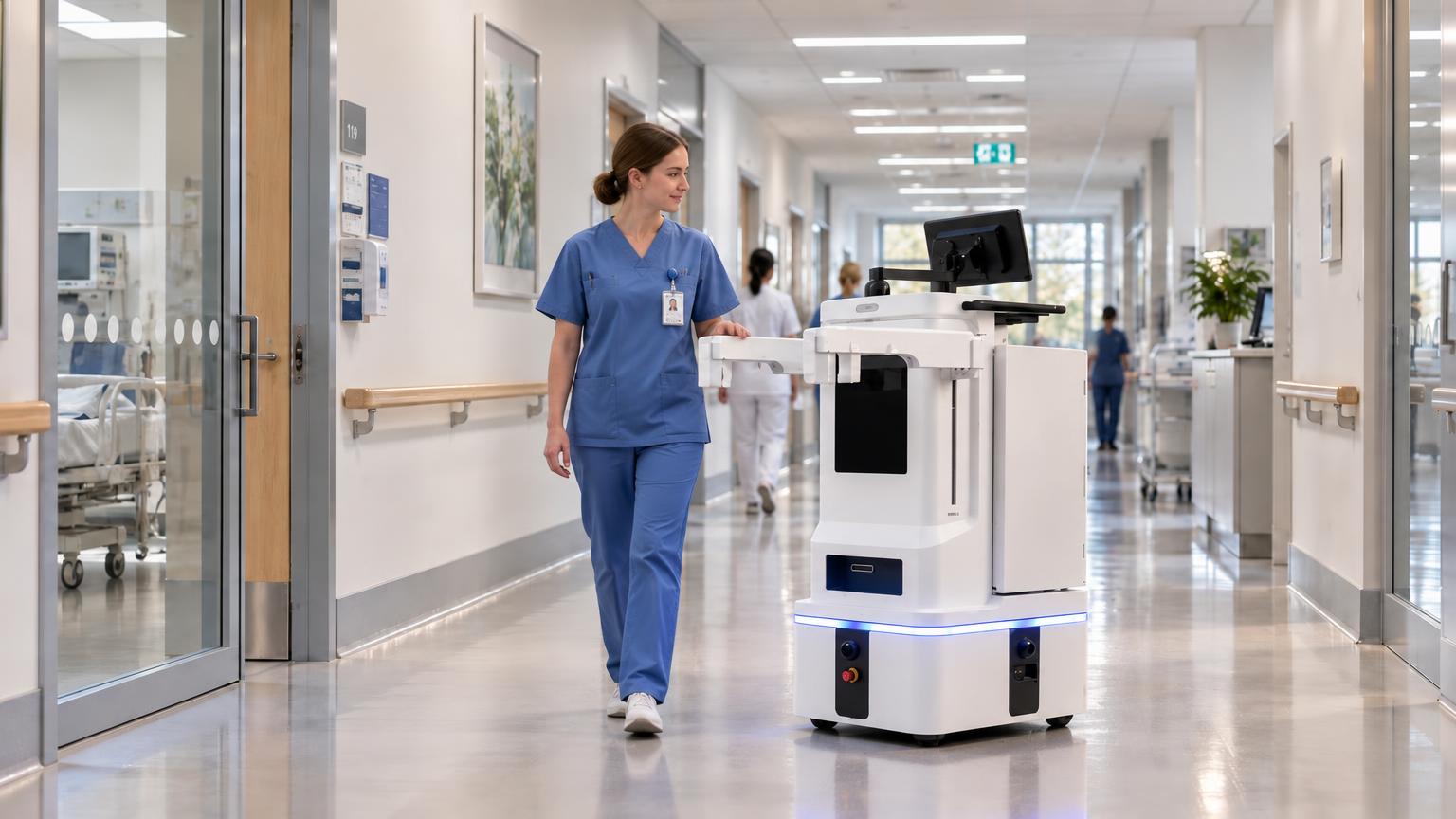
Hospital logistics
Drivey
Move existing trolleys and explore bed transport workflows, with routes and connections evaluated around your hospital's equipment.
Meet Drivey
Hospitals
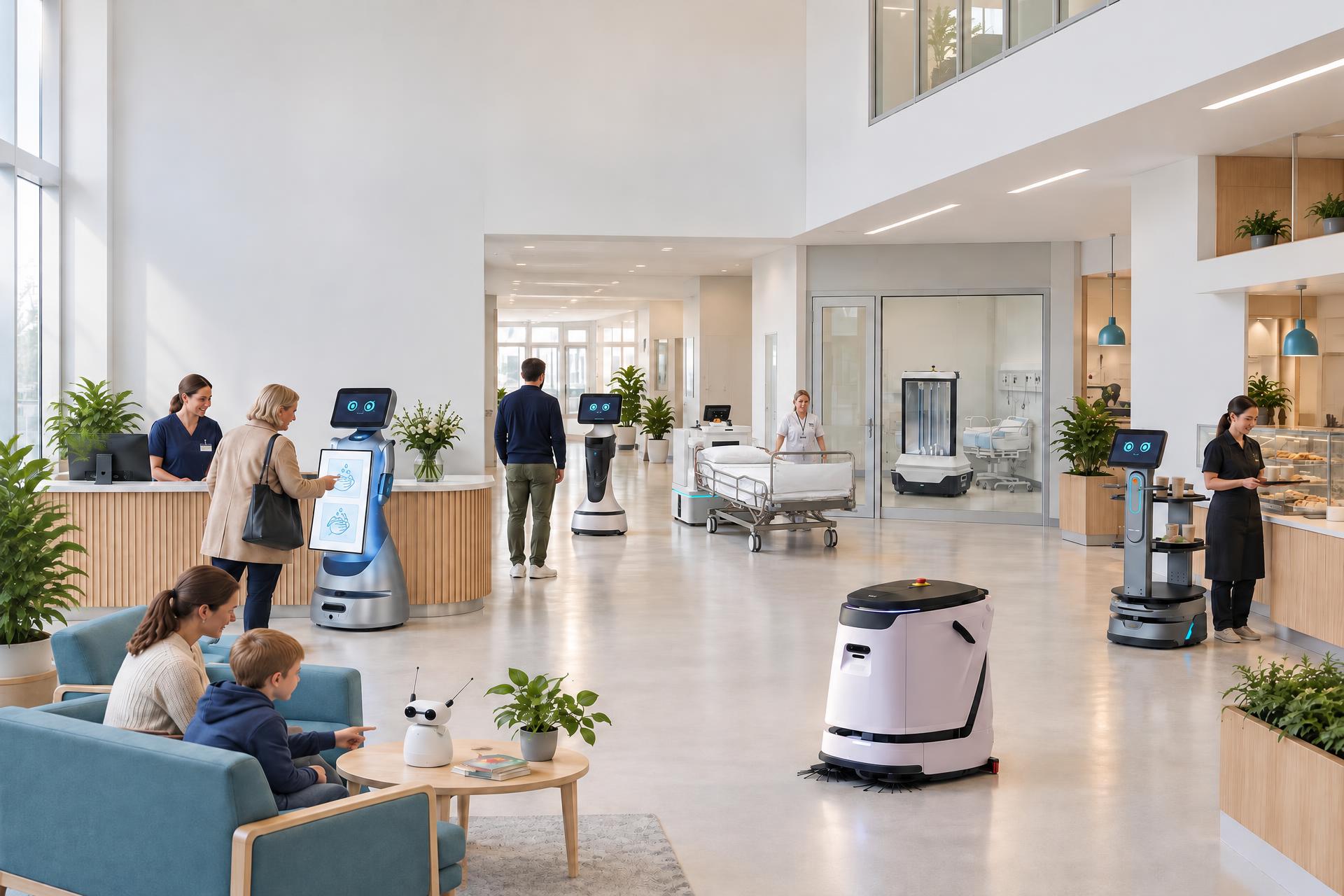
Support the practical work around wards and departments — so clinical staff can focus on patients and the moments that need a human.
A bed needs moving. A trolley needs to reach the washing area. A visitor is looking for the right department. In a hospital, these tasks run around the clock alongside clinical care.
Robots can support selected, repetitive routines — not replace the judgement or attention of your team. The starting point is a task that fits your hospital and makes sense to the people working in it.
Keep materials and equipment moving between wards, storage and service areas.
Make arrival easier for patients and relatives in busy public areas.
From internal logistics to a welcoming first interaction, each role starts with a specific task. Suitability, configuration and safety are assessed for your site.
Hospital logistics
Move existing trolleys and explore bed transport workflows, with routes and connections evaluated around your hospital's equipment.
Meet Drivey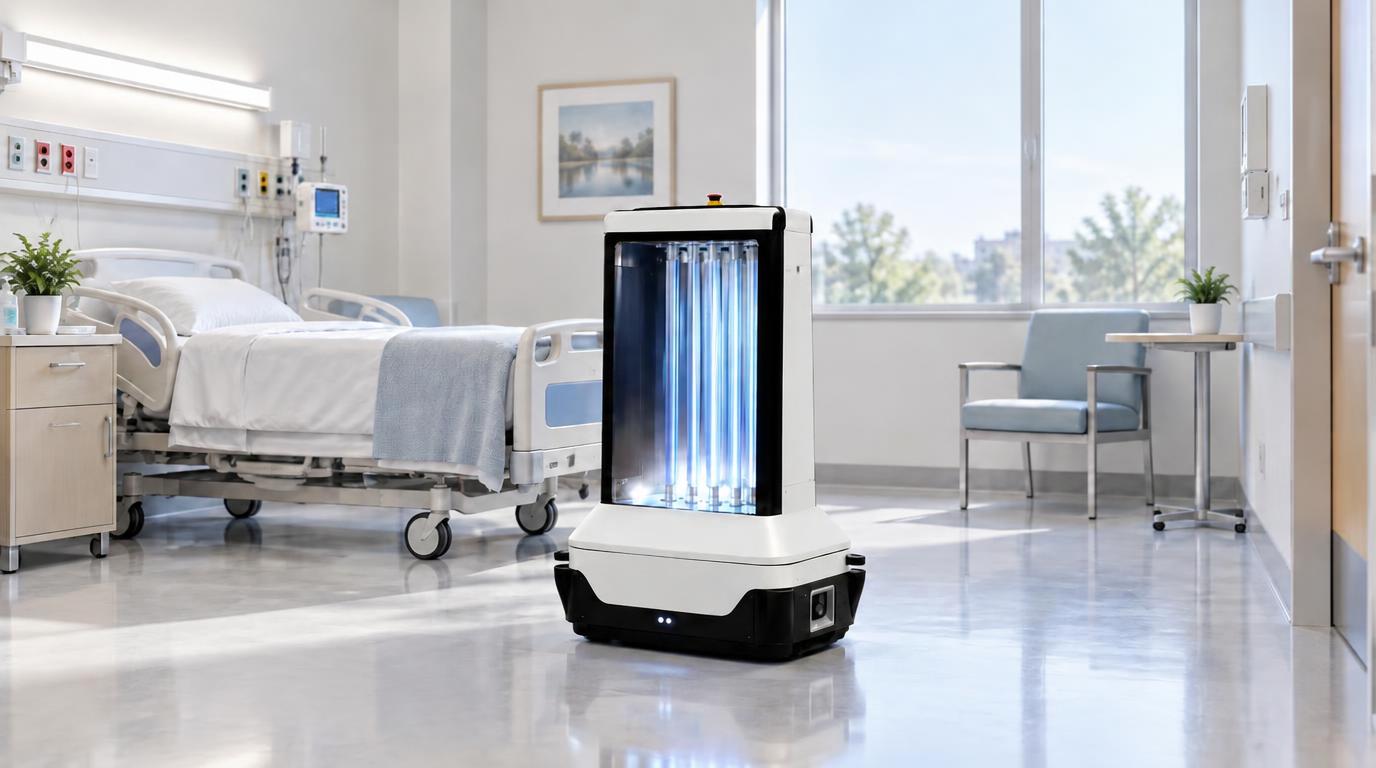
UV-C disinfection
Support room disinfection as part of an agreed hygiene routine. UV-C operation requires an unoccupied space and appropriate safety procedures.
Meet Charlie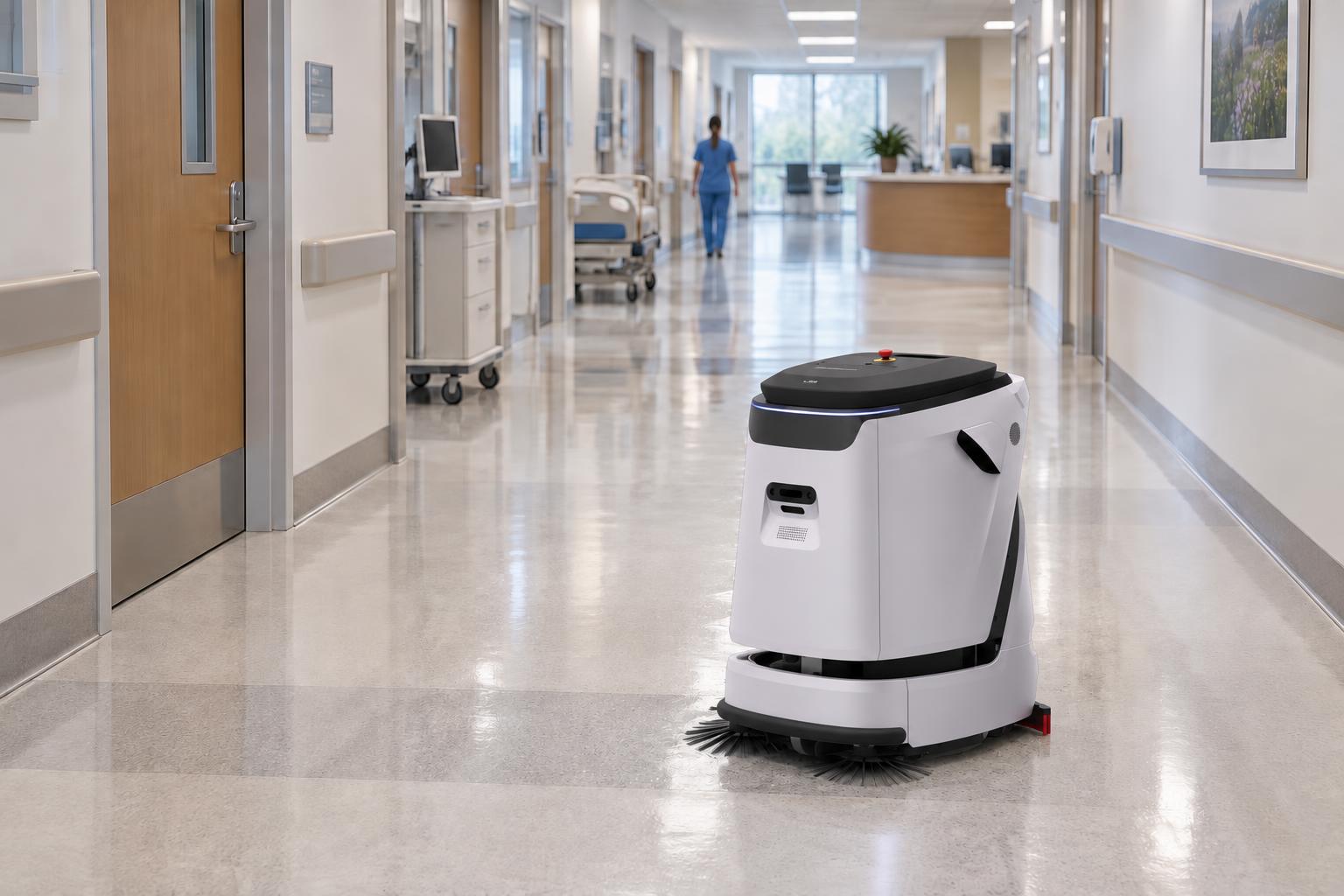
Floor cleaning
Take on repetitive floor cleaning in corridors and shared areas, with schedules planned around patient traffic and the cleaning team's work.
Meet Freddy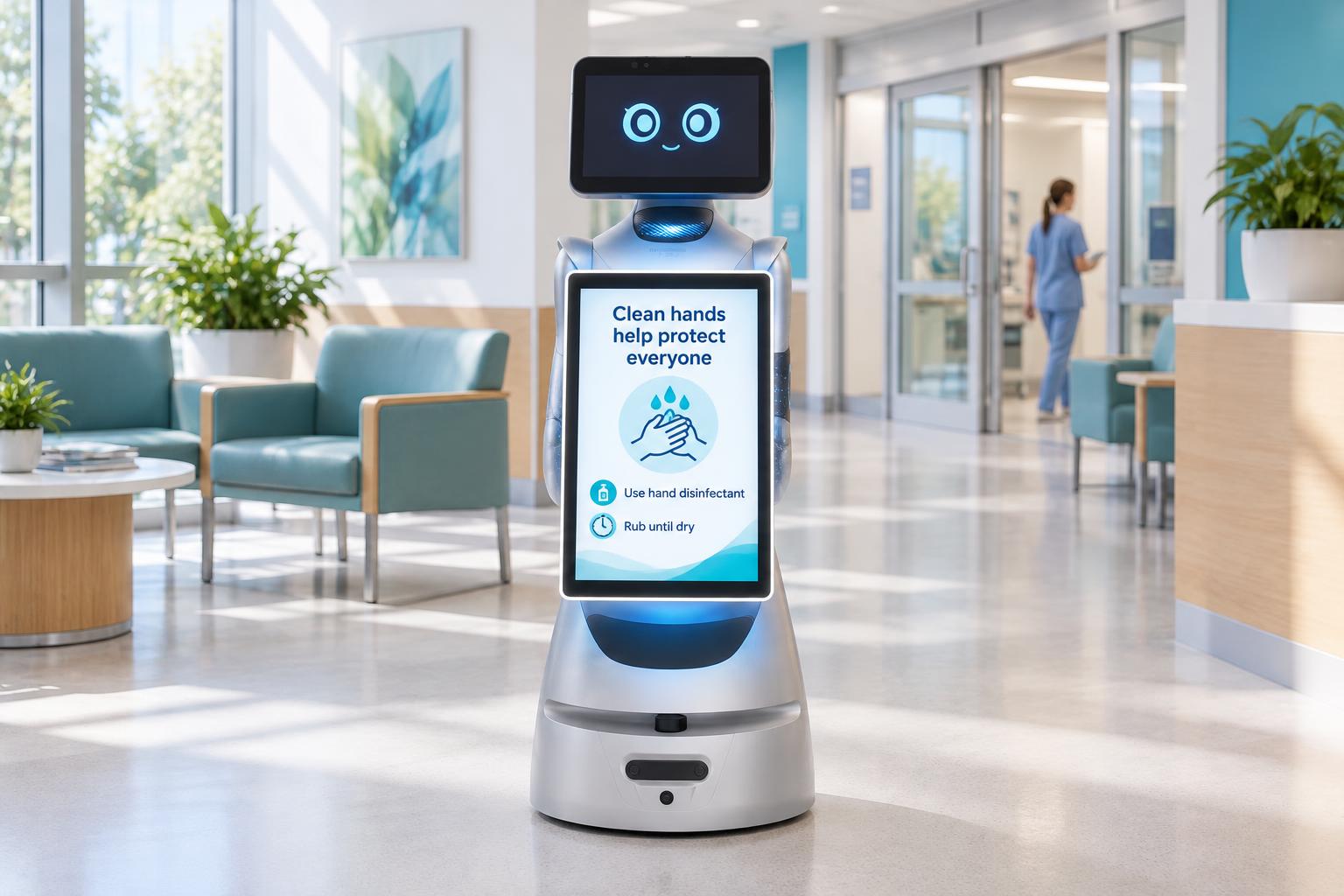
Information & hygiene guidance
Display clear directions, service information and step-by-step hand-hygiene instructions on a large screen, with content tailored to your hospital.
Meet Alf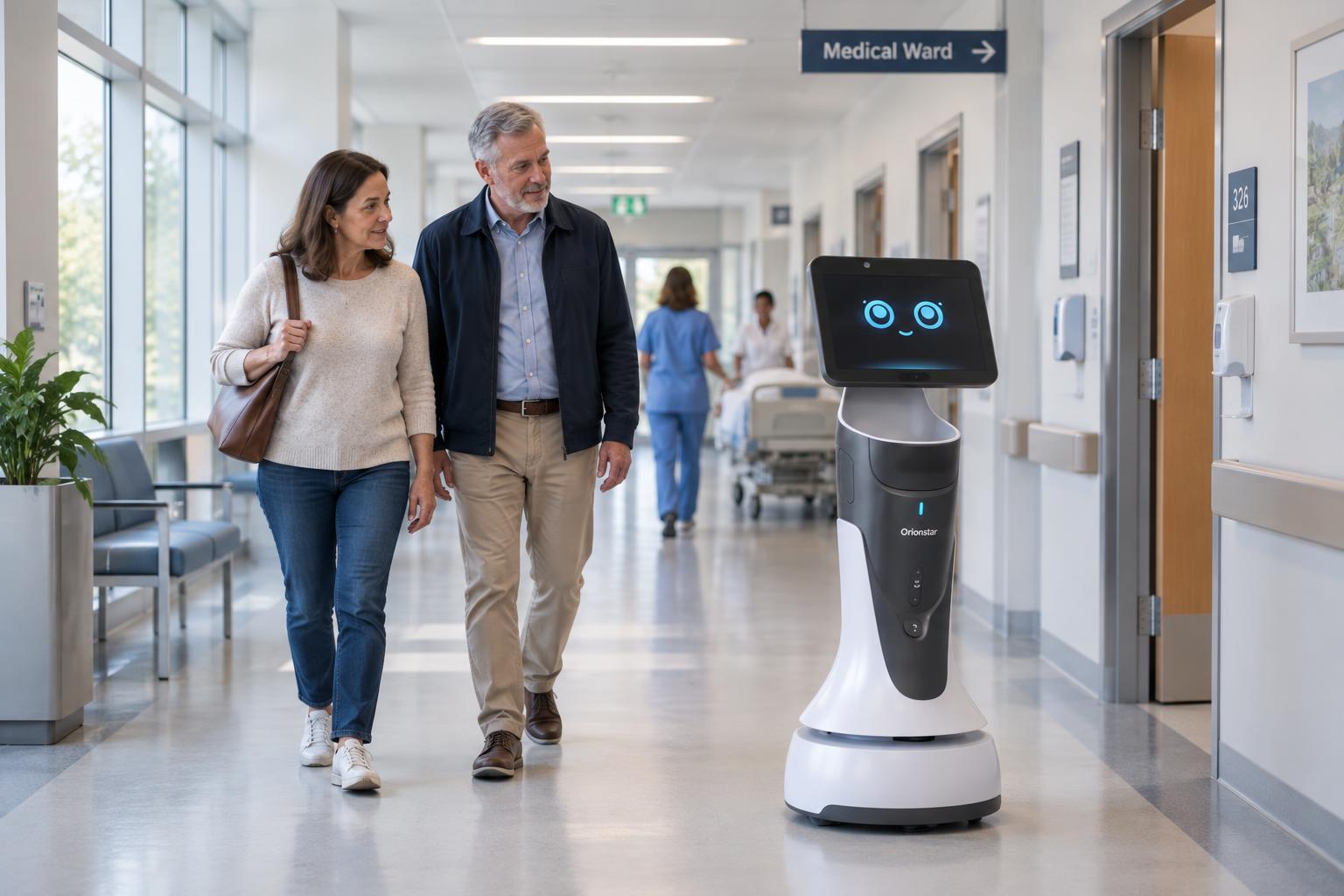
Patient & visitor guidance
Help visitors find departments and services with configured guidance and reception information, while staff remain available for personal assistance.
Meet Betty
Playful companionship
Explore friendly interaction for children waiting with family or gentle distraction during a doctor-led visit. Activities are configured for the setting, not medical treatment.
Meet Reachy
From a real hospital pilot · Gothenburg
At Östra, Drivey transported cleaning trolleys between the hospital's logistics and washing areas — sharing corridors with patients, staff, beds and equipment.
The pilot demonstrated the core transport concept and highlighted practical integration work, including automatic doors and changing traffic. That real-world learning guides the next steps towards commercial deployment.
Read the hospital pilot storyA focused pilot lets clinical and operational staff assess the robot together, in the hospital where it will actually work.
Identify a repetitive task with the people who do it — from trolley movements to visitor guidance.
Review corridors, lifts, doors, traffic, hygiene requirements and the responsibilities of staff.
Test one defined use case with your team and observe how it fits everyday hospital routines.
Review task completion, staff feedback and practical integration needs before deciding what comes next.
Tell us about your hospital, department or clinic. Together, we can identify a practical place to start.
Blog
We're here to help!

